This second video includes my mom's dog chasing Calvin. It was crazy windy so if you have your volume up, you'll definitely hear it. Now this is really dangerous for the dog and I would not recommend anyone let their dogs do this, including my own who is wisely laying off in the shade outside the arena. However, my mom knew the risks involved and still decided to let her dog do it. Calvin is actually pretty good with dogs as he's used to my dog following behind while riding.
Thursday, April 30, 2015
Play Time!
We may train hard, but we definitely play hard too! I've let him lose in the big arena to just burn some energy and be a horse. Both times I had people with me and they were able to shoot video while I made sure he didn't run into me. He loves having the wide open space to run!
This second video includes my mom's dog chasing Calvin. It was crazy windy so if you have your volume up, you'll definitely hear it. Now this is really dangerous for the dog and I would not recommend anyone let their dogs do this, including my own who is wisely laying off in the shade outside the arena. However, my mom knew the risks involved and still decided to let her dog do it. Calvin is actually pretty good with dogs as he's used to my dog following behind while riding.
This second video includes my mom's dog chasing Calvin. It was crazy windy so if you have your volume up, you'll definitely hear it. Now this is really dangerous for the dog and I would not recommend anyone let their dogs do this, including my own who is wisely laying off in the shade outside the arena. However, my mom knew the risks involved and still decided to let her dog do it. Calvin is actually pretty good with dogs as he's used to my dog following behind while riding.

Wednesday, April 22, 2015
Weekend of 4/18

This weekend my equestrian center was hosting a horse show. It was a small unrated or county show. This is largely different from what I used to compete in, which was considered "A" or "AA" show and was governed by USEF. A whole different, expensive beast with more $$ thrown into it as well.
I didn't enter Calvin in this tiny show, although it would have been fun if I had the time just to see how he'd do. Regardless, I decided to ride him and walk him around where the show was happening. Anyone who has attended a horse show knows the "vibe" that goes with it. There's a sort of electricity in the air. Fueled by nervous horses and riders, adrenaline, and competition. I talk about this electricity because horses usually always act differently at horse shows unless they are seasoned. I got on Calvin and right away could tell it was going to be a fun ride.
He was so distracted by the show it was hard to keep him focused in the arena! This meant lots of training to keep his mind busy which he didn't really enjoy, but was good practice for "focus on me not the other horses!" I had to work him harder than usual and that did eventually tire him out. Once he was tired enough that I knew he wouldn't spook at everything, we decided to walk around the show grounds. I would have taken pics except I was more focused on making sure he didn't throw me or take off. It was good for him to see new things and feel that electricity without the pressure of having to actually compete.
The next day, after the horse show was over, I turned him loose in the big arena and oh my god did he run. He ran so much that it's a miracle I stayed on the day before with this much pent up energy! You'd think living in a pasture would give him that outlet to run but apparently not. I guess I'll be turning him loose more frequently. All things considered he was very good this weekend. He even got some compliments on how handsome he was. Hard to disagree, he looks so spiffy in his dressage tack!
Here are some pics from just hanging out in his pasture:

His "omg that's the spot" itchy face

Nothing beats a good roll after a bath, also that's his new fly mask. He seems to prefer the ones with ear holes as they don't make him as sweaty.

He loves to cuddle
Sunday, April 12, 2015
More Trails and Yacht Rein Review
Got back on the trail again this Friday to go a bit farther than we had previously. He was "awake" that day-- distracted, sensitive, and very alert. Not naughty by any means, but just... kind of on edge. We rode next to the edge of the dam and there were some fishermen there. But they might as well have been monsters from the deep because Calvin stood there refusing to move forward just snorting at them. Or I'd ask him for a trot by *lightly* squeezing and he'd launch into a canter. Not to mention the great blue heron which flew out of the water which caused an identical spook to the one that got me off last time. Luckily this time I was in a saddle and I was able to get him back under control. Yeah, definitely on edge.
Finally we moved past the dam onto some quieter trails. I decided to take him off the path and into the brush. He doesn't even think twice about the plants being up to his belly, good mustang!


Finally we moved past the dam onto some quieter trails. I decided to take him off the path and into the brush. He doesn't even think twice about the plants being up to his belly, good mustang!
Summer coat means showing off his awesome brand again
Off-roading. The good thing about him being distractible is it makes for good ears-forward pictures ;)
My full trail bridle set up includes a $20 western bridle (which I can't stand because the throatlatch keeps riding up into his throat kind of defeating the purpose of the throatlatch, but you get what you pay for), my nathe snaffle bit (which I absolutely love so much I'll probably do a separate post on it!), and yacht reins. Definitely not your average trail get up, but then again we're not your average trail horse and rider! My next "upgrade" will be to a better fitting bridle, perhaps a biothane one for the easy upkeep, but in the meantime I need to find a way to fix it.
I used my new yacht trail reins on this ride and was really pleased. If you've been keeping up with the blog, you'll remember that the last time I ate it Calvin decided to step on my reins and they broke. Because I didn't want to spend $$ on decent (read: expensive) English reins, I bought some yacht reins. They're softer than leather and lower-maintenance, something I'm all about for trail riding! I bought the 12' length which is *perfect* for trails and letting him stretch down to sniff or eat, I love long reins. I wasn't sure how I'd feel about the clips to the bit, whether they'd be too loud with metal on metal, but I found that it wasn't too distracting and Calvin didn't seem to mind, which is really what matters most.
I miss my old trails which were more challenging for both of us in terms of elevation and technical difficulty. Also, I miss riding with other people and their horses! Looks like I'll have to plan an adventure soon when I have more free time, maybe this summer :)
Thursday, April 2, 2015
Do Horses need Leg Protection?
Those who know me know that I research the hell out of anything that I buy. I'm not a person to jump on the trend-wagon because top rider X is using X brand and it looks pretty--something very common in the horse world. Thanks to the internet and science, researching products is easier than ever. So I set out to research: do horses need leg protection after all? If so, which boots are best?
I was raised in the hunter jumper world to always use leg protection on our horses. Whether it was hacking or jumping, it was always part of my routine.


I was raised in the hunter jumper world to always use leg protection on our horses. Whether it was hacking or jumping, it was always part of my routine.
My leg protection of choice was polo wraps or hard shell open-front boots for jumping
So what does the research actually say about horse leg protection? Well, this was a complicated answer. More research needs to be done in the horse-boot field and there aren't any standard procedures to test boots. This leaves the claims made by companies to be up for debate and down to the consumer to decide whether they want to believe these claims. Overall, there was not one "perfect boot" at this time.
Here's one study's take:
"In tests designed to replicate the blows caused by hitting a fence, overreaching or encountering a sharp object, Marlin said many boots and bandages provided inadequate protection at best or increased the damage at worst." Hmm, that's not a very encouraging finding.
However, there are personal accounts of boots saving horse's tendons that sliced the boot, but the leg remained intact. The research says that if one does decide on boots, that they should be very breathable and lightweight--two very difficult tasks. Boots are suggested for horses that are more likely to "interfere"--hitting themselves with their shoes or hind legs with jumping. They are also more likely to hit themselves on the fences--see below:


Been there, done that!
Boots do have pitfalls however, despite protecting against brushing and interference. First, they add weight to the leg which can impede how the horse moves and add to fatigue. Even the smallest amount of weight added makes the horse have to work that much harder to make the same movements. Couple that with being bogged down by water and sweat means an even heavier boot that the horse has to compensate for. Also, boots do increase heat to the leg which I will discuss in the polo wrap section.
So what about polo wraps, a favorite among english disciplines for flatwork, and similarly SMB style boots popular in Western disciplines?
Many of the arguments say that polo wraps support the tendons and ligaments which is absolutely false and has been disproven. The only thing polo wraps can help with is providing minor cushioning for interference and brushing. Yet polo wraps can make brushing and interference worse by widening the leg and actually causing the horse to interfere. Polo wraps and boots also heat up the legs so much that what little benefit they provide is outweighed by the negative effects of overheating the legs. An interesting find since polo's are so popular amongst top riders even for flatwork.
No boots, no interference, no problem
Personally, I don't use boots anymore, whether on trail or in the arena. Calvin doesn't interfere or overreach (back legs hitting the front legs) and therefore he does not have a physical need for boots. Science does not support the use of boots for dressage and flatwork (on the normal moving horse), so I won't continue to use them. I will admit it was a strange transition and I was paranoid about him hitting himself for a while, but all that worry was for naught. With boots, his legs would get so sweaty and without, no issues whatsoever. Also, having him barefoot helps because if he does clip himself he is hitting himself with his natural hoof and not steel. That being said, I haven't seen any damage due to riding without boots under saddle. That being said, if I were to jump him I would put some boots on to protect his legs, but I don't plan on jumping for a long time.
If you'd like to read an interesting article about the subject and decide for yourself based on science, take a look at this. I'm interested to see what boot manufacturers continue to come out with and see if there any any improvements for the high impact sports in the future.
Tuesday, March 31, 2015
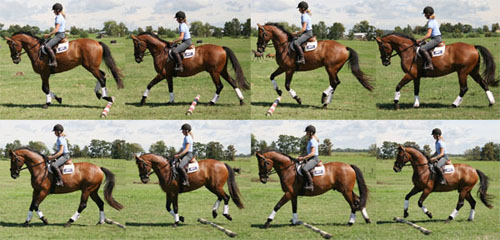
Calvin doing Grid Work
Finally got to bring my boyfriend today and had him be the photographer to get some much needed updated riding pics! Hence, this post is picture heavy and remember that most of these pictures will expand if you click on them.
Calvin has come a long ways in the year I've had him and is starting to become a really nice riding horse--listening to cues, taking contact, leg yielding, and stopping with just using my seat, etc. We practiced more grid-work this week--I talked about the benefits of grid work in my other post. One huge benefit being that it doesn't stress their joints like jumping, yet it has them use their minds and bodies in different ways.

Happy baby! He had to go in the cross ties today vs. being tied hard on a hitching post. I've learned to hate cross ties because it limits the horse's freedom so much--they can't move their head very well. Usually I tie him to a post, but they were all being used today, that way he can move around a little more and get flies/itch if he needs to.

Bridling

Ready to work! Notice how loose my noseband is (the part over his nose)--I fit 2 fingers in there. I learned in h/j world to just crank it down pretty snug. But really it should just discourage his mouth opening, not completely prevent it. This way he can drink water or grab a snack pretty easily, yet still can't gape his mouth to avoid the bit. I still don't know how I feel about flash nosebands...so I don't use one. Also if any English snobs out there notice my reins don't match the dressage bridle, it's because he stepped on them during my last fall. Hence I had to switch to my trail reins, which are actually more comfortable anyway.

Walking over poles, he's learning to keep his head in the right place now that he's building up topline.

Trotting over poles now, nice position his neck is in and I'm really happy with that. My hands are out "wide" because I'm encouraging him to go straight, you'll see that in my pics

Here you'll see he's reaching with his legs as my poles are set wider to encourage him to extend his legs. Also, so much dust in this arena because they're cutting down on water usage due to the drought.


Stay straight baby!

I encourage him to drop his head like this as it really stretches his back nicely. Like I talked about in this post, eventually I'll bring him up into the dressage frame, but he needs to build up his back and hindquarters first.

long and low at the walk

Canter poles

Some of my bad habits showing from h/j land--perching! Ugh, sit up straight!

More perching ugh. I like this picture though because you can see his great barefoot hooves

That's better! Calvin is going long and low here.
I really enjoy bringing up a young horse without the pressure of competition. I can't believe I used to jump so high when the horses were so young! Then again, they have to start horses really young when they need to jump 4'+ by the time they're 6. Anyway, I can clearly see Calvin is still growing so I can't imagine jumping a 4 year old now. Although just because I'm not competing doesn't mean I don't want to improve, hence our dressage training :)

Bonus shot: even the boyfriend got to ride. Here he is learning to post, he has really nice posture--a natural!
Monday, March 23, 2015
Weekday Trail
Every week I drive 200 miles to work and school. To go to Calvin is another 30 miles, and frankly some days I just don't have the desire to drive anymore. I end up heading out there about twice a week though, yet I wish I could see him more. I dream of being able to get up, go out back, and being able to pet a soft horsey nose when I'm feeling stressed. I guess I'm telling you this because that's why I don't post too frequently, because well, I don't go all that frequently.


He likes to stand by me when I clean his pasture, such a love-bug
However, I did get up and out to the ranch today and it was beautiful. I was up early and got to ride before the heat started. Going during the week is fabulous because it's so peaceful, there aren't hardly any campers on the trails or a bunch of people in the grooming area. Today was a trail day, Calvin has been stuck in his corral so I figured he needed to see the world some more. I love this time of year. He was very good, we worked on transitions (walk-trot, trot-walk, walk-halt, etc) which really get him paying attention to me and learning patience, a never ending struggle ;)
Nice shot of Calvin's brand, now that he's getting his summer coat you can see it again

"Keep off grass"--looking longingly at the park we can't ride in I got 4 ears in this picture!

Beautiful day!
March Hooves and Pasture Paradise
Due to my location, land is at a premium and hence about 95% of horses in my area are kept in stalls. It was really amazing I could even find "pasture" boarding at all. However, people in other parts of the US and even the world are probably laughing at my idea of a pasture which is really just a small corral. However, it's better than a stall so we will take what we can get.


What most people think of when they hear pasture vs. where Calvin actually is
Anyway, because he's living in a small dirt pen with three other horses, his hooves aren't getting the work that the would in the wild. They're turning soft, both due to his diet, inactivity, and soft dirt footing. Without further ado, here are his feet after our "winter"

RF: Not growing as much sole, frogs softer, more white line

LH: The white stuff is for treating/preventing the bacteria growth in his hoof, I forgot to take pics before I treated his feet.

RH: Better than fronts but still not enough growth

RF: his fronts are definitely worse than the hinds in terms of white line spacing. While his feet may not be what they once were, they're still looking pretty great.
My trimmer said that the best hooves are ones that are "in work" meaning, ones that are ridden or worked more frequently. I'm hitting the trails more now to get him back on the rocks/gravel to toughen them up again. My trimmer is very concerned about him being sensitive on gravel, so I'm wary that this is possible and am paying attention to times he may be acting tender on his feet. However, so far he crunches gravel just like he used to without acting tender in the slightest. We don't have the rocks that my last boarding place had, which helped his feet even more, but thanks to our dry terrain there is still enough hard footing to build his feet back up. If he does show tenderness though, I do have boots I can use :)
How do people combat this with the barefoot horse? Well, they either put horse shoes on (to hide the issue, still doesn't fix the hoof), change the feed or environment, or they create what's called a paddock paradise. One day when I actually have land, this is what I'm going to create. It mimics what horses do in the wild. Instead of having one big pen, you create "roads" which the horses travel on. The idea behind the roads is a number of reasons: 1) to limit how much green grass a horse can eat--limited amounts is okay, but too much high sugar grass leads to founder 2) horses travel in "roads" in the wild, using frequently traveled paths and sticking together. Ideally these roads would involve multiple terrain types: hills, ditches, water, rocks, etc. We can artificially create this by using gravel/rocks in certain parts, logs, or creating hills. Then you spread the food out throughout the pasture, forcing them to move around and eat, not just eat in one location. All the different terrain types creates a fit horse and fit feet, hence why it's the ideal setting. But people are afraid of this: my horse will turn up lame, they'll hurt themselves on obstacles/rocks, etc. People forget that horses have grown up this way for millennia, just because humans are hell-bent on destroying good feet doesn't mean that their feet are ruined in this short amount of time we have been domesticating them. Anyway, as I talked about before, any horse can go barefoot...but it is a lifestyle change and people don't like change.
Here are different examples of paddock paradise:

Cordoning off parts of the pasture, gives a good example of the roads created

Rocky terrain, similar to how the mustangs live in the wild
Natural obstacles keeping them active
Oh and let's not forget the beautiful feet created by living on this terrain:
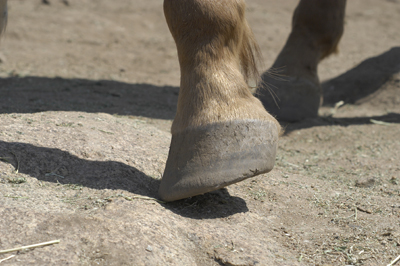
This horse is 6 months without shoes (the paint horse from the above photo feat. rocky terrain)
Subscribe to:
Posts (Atom)